

 English
 中文简体
中文简体 русский
 Email us now!
 Author: Admin Date: 2026-07-03
What Makes a Reliable Angle Valve Supplier Stand Out in Today's Industrial Market?
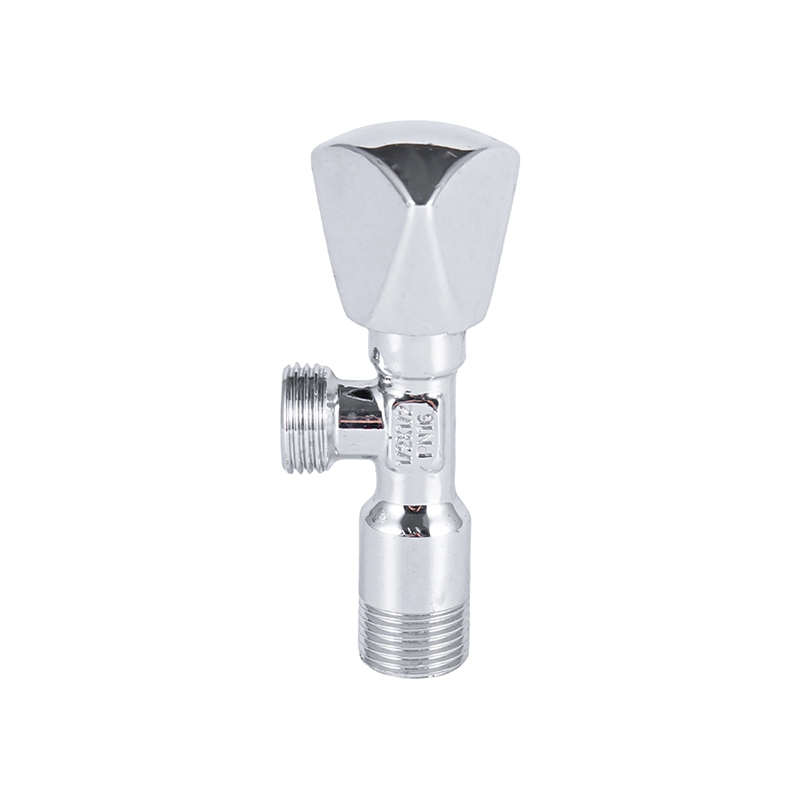
Selecting the right Angle Valve Manufacturers has become more challenging as industrial projects demand higher reliability, longer service life, and better compatibility with automated systems. Recent discussions across engineering communities and industrial procurement platforms show that buyers are paying closer attention to material traceability, pressure performance, maintenance costs, and customization capabilities rather than simply comparing prices. Whether used in water treatment, chemical processing, food production, or power facilities, an angle valve is expected to perform consistently under demanding operating conditions. As a manufacturer, we believe understanding these purchasing priorities helps buyers make more informed decisions while reducing long-term operational risks.
Why Material Selection Has Become a Procurement Priority
Material choice directly affects valve performance, especially in corrosive or high-temperature environments. Buyers are increasingly searching for terms such as stainless steel angle valve, corrosion-resistant industrial angle valve, and custom angle valve for chemical applications. Instead of choosing a standard product for every project, engineers now match valve materials to specific media and working conditions.
For example, stainless steel is commonly selected for clean process industries, while duplex stainless steel or other specialty alloys may be considered for more demanding environments. Choosing the correct material at the beginning of a project often helps reduce maintenance frequency and extends equipment service intervals.
Automation Is Changing Valve Selection Standards
As industrial automation continues to expand, valves are expected to integrate smoothly with modern control systems. Many buyers are no longer purchasing components individually—they are evaluating how every valve fits into the entire production process.
Today, procurement teams frequently ask about:
- Compatibility with pneumatic or electric actuators
- Stable sealing performance during frequent cycling
- Easy installation within automated production lines
- Consistent dimensions for equipment replacement projects
From our manufacturing experience, products designed with future automation upgrades in mind are increasingly preferred over conventional designs.
Leak Prevention Remains One of the Biggest Concerns
Unexpected leakage can interrupt production schedules, increase maintenance costs, and create safety concerns. This explains why "industrial valve leakage solutions" and "high-performance sealing angle valve" have become popular search topics among engineers.
Reliable sealing depends on more than gasket selection. Precision machining, accurate surface finishing, appropriate seat materials, and strict dimensional control all contribute to long-term sealing performance. During manufacturing, every machining step should support consistent assembly accuracy to minimize the possibility of leakage after installation.
Custom Manufacturing Is Becoming the New Standard
Industrial projects rarely have identical operating requirements. Buyers increasingly request valves designed for specific pressure ratings, connection standards, installation dimensions, or media compatibility.
As a manufacturer, we regularly support OEM and custom production services, including:
- Customized body materials for different industries
- Multiple end connection options
- Surface treatment based on application requirements
- Drawing-based manufacturing for special engineering projects
- Batch production with consistent quality control
This flexibility allows procurement teams to simplify installation while reducing later modification costs.
Quality Documentation Builds Purchasing Confidence
Many overseas buyers now evaluate manufacturing capability before requesting quotations. Technical documentation has become an important part of supplier assessment.
Customers often request:
- Material certificates
- Pressure testing records
- Dimensional inspection reports
- Production traceability documentation
- Packaging solutions suitable for international transportation
Providing complete technical documentation not only supports project approval but also helps buyers manage quality requirements throughout the supply chain.
Choosing a Manufacturing Partner Instead of Just a Product
Industrial procurement is increasingly focused on long-term cooperation rather than single transactions. Beyond product specifications, buyers value responsive technical communication, stable production capacity, and the ability to support future project expansion.
As a professional manufacturer, we work closely with engineering teams from the design stage through production, inspection, and delivery. By understanding actual operating conditions before manufacturing begins, we help customers select practical valve solutions that support reliable performance over time.
As industrial systems continue to evolve toward higher efficiency and smarter process control, experienced Angle Valve Manufacturers that combine engineering expertise, flexible customization, rigorous quality management, and dependable production capabilities will remain valuable partners for global distributors, OEM equipment builders, and industrial end users seeking durable valve solutions.

-
Feedback
Yuhuan Xianyun Valve Co.,Ltd. is located in China valve capital" Zhejiang Donghai New city asea garden -Yuhuan, is a collection of design, pro-duction, sales of valves, plumbing sanitary waremodern brand enterprises

Contact Omformation
- Tel: 0086-13506861910
- E-mail: [email protected]
- Add: Qinggang Shuangtang Industrial Zone, Yuhuan City, Zhejiang Province, China.
Copyright © 2024 Yuhuan Xianyun Valve Co.,Ltd. All Rights Reserved.

Sale Plumbing Valves